
Crystals
What Is Moldavite?
A quick, honest guide to Moldavite — what it actually is, where it comes from, and why it's associated with transformation.
Moldavite is a rare green tektite — a natural glass formed roughly 15 million years ago when a meteorite struck what is now the Czech Republic. The impact melted the surrounding rock and hurled it high into the atmosphere, where it cooled into the strange, mossy-green pieces we know today.
Almost all authentic Moldavite in the world still comes from that one small region of Bohemia. That's part of why it's so scarce, and why prices have climbed so sharply in the last decade.
Where Moldavite comes from
Only one impact site produced Moldavite: the Nördlinger Ries crater and its scattered strewnfield across parts of the modern-day Czech Republic. Because the source is fixed and small, the world's supply is genuinely finite. There is no new Moldavite being made.
Why it looks the way it does
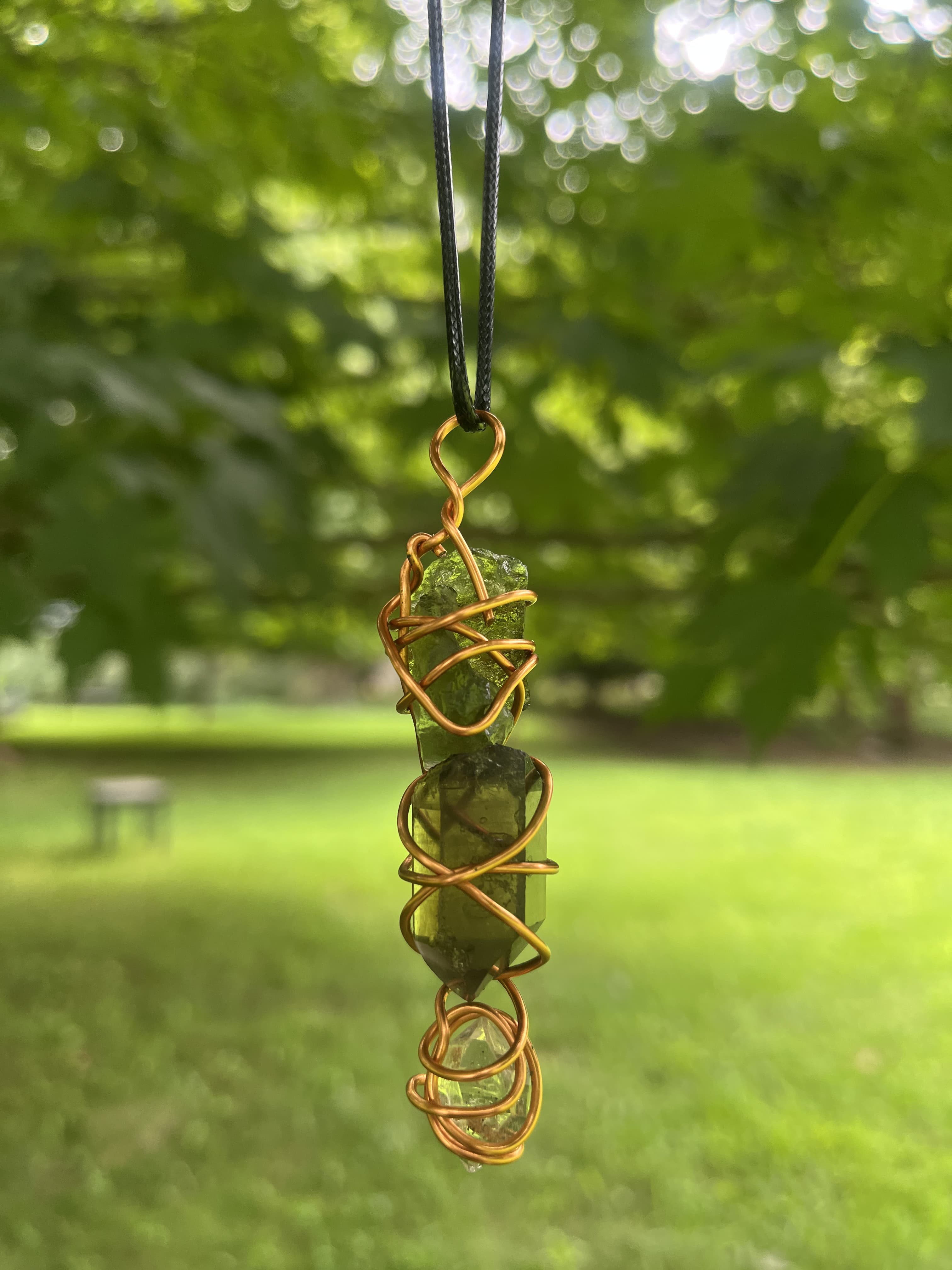
Moldavite's surface is often deeply pitted or grooved — those textures were baked in as the molten glass cooled while flying through the air. Its color ranges from olive to a deep forest green, depending on the iron and mineral content of the rock that melted.
Its association with transformation
In crystal-healing traditions, Moldavite is called a stone of transformation — associated with awakening, expansion, and rapid inner change. Some people wear it expecting a jolt; others describe it as more of a quiet, steady acceleration.
Whether or not you resonate with the metaphysical framing, there's something undeniable about wearing a piece of glass that fell from the sky. It's a talisman with a story built in.
How to tell if Moldavite is real
Real Moldavite is:
- Lightweight for its size (it's glass, not stone)
- Mossy or forest green with slight color variation
- Textured — bubbles, grooves, and irregular edges are the norm
- Often paired with a certificate of authenticity from a reputable seller
Fakes are common in the current market — anything perfectly smooth, uniformly bright green, or suspiciously cheap is worth a second look.
A gentle note
Whether you're drawn to Moldavite for its geology or its symbolism, treat it as what it is: a small piece of an ancient collision, wearable on your body. That framing alone tends to make it feel significant.
Objects in this piece
Related guides
Crystals
Why Pair Moldavite With Smoky Quartz?
Moldavite is famously intense. Smoky Quartz is famously grounding. Together, they're one of the most-recommended pairings in crystal work.
Crystals
What Is a Herkimer Diamond?
Herkimer Diamonds aren't diamonds — they're something arguably more interesting. Here's the short version.